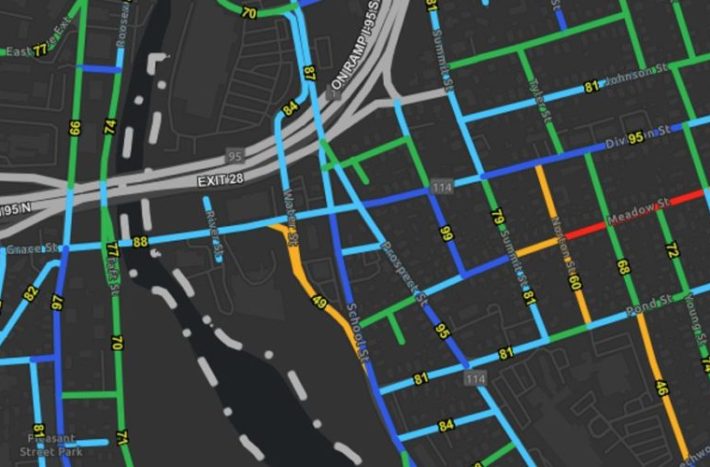
Each year on November 19, GIS Day celebrates the power of geographic information systems and the importance of this ever-evolving technology – and, most importantly, the people powering it.
Since 1999, GIS Day has been dedicated to sharing, teaching, and inspiring others with GIS and the ways it gives us a deeper understanding of our world.

This year’s theme, “Where Spatial Meets Everything,” highlights the expanding role this technology plays in nearly every discipline, from infrastructure planning and environmental management to public safety and community engagement. At BETA, our GIS & Asset Management team is a crucial component of our multidisciplinary workforce.
To honor GIS Day, we sat down with some of our newest teammates to learn why they chose to pursue a career in this industry, how BETA supports their professional growth, and the ways they expect geospatial technology to shape the future of the communities where we live and work.
What first sparked your interest in GIS?

Jay – Senior Project Manager
“I was in school at UMass Boston studying environmental science, and thought that I would be a high school science teacher. While I was walking through the halls of the college, I overheard someone saying “G-I-S”, and I had never heard those letters put together before. I then inquired with my advisor and was able to take a GIS 101 course. As I have always had an interest in art, computer science, geography, and maps, the class spoke to me and hooked me!”

Steavi – Senior Geospatial Analyst
“During my last semester of my undergraduate degree, I took a crime mapping class that used geospatial technology. I loved it so much that I then went on to get a master’s degree in GIS at Northeastern University.”
Klansee – Senior Geospatial Specialist
“I was first introduced to GIS in my archaeology laboratory methods class, and it wasn’t love at first sight! I didn’t really start understanding and appreciating GIS until the summer of 2018. I had an accident that landed me in a wheelchair and out of the archaeology field, and I wanted to find a way to advance while limited. I reluctantly started taking classes, and by the end of the first semester, I realized how interesting and flexible this industry could be.”

Isaiah – GIS Specialist
“My interest in GIS began after taking an introductory course at Brown University. Although I studied geology, I wasn’t initially sure how to apply it professionally. Learning about ArcGIS Pro and the wide range of careers that utilize this technology sparked my enthusiasm for the field.”
What made BETA the right place for you to grow your GIS career?
Jay: “I have known Tito Sanchez, a Senior Project Manager at BETA, for a while, as we crossed paths through the Geospatial Professionals Network (GPN-NE). Once I had a chance to meet Tony Garro, who oversees the team, and discuss the work that BETA is doing in the realm of GIS, I could see myself helping shape the foundation of where this discipline is going at BETA.”
Steavi: “The great thing about GIS is that it is an all-encompassing field; it has many disciplines. I first started my career doing military operations, then insurance hazardous mapping. I wanted to explore another discipline – asset management – and BETA offered that to me.”
Klansee: “BETA was the right place for me to grow because it showed up right when I needed it. It offered me the opportunity to get back into transportation-related work, which I found I was really missing. Plus, it has the added benefit of being right near my wife’s office!”
Isaiah: “BETA has given me the opportunity to explore the professional path I’d like to pursue within GIS. Through the trainings offered and discussions about my goals and career aspirations, I’ve gained a clearer understanding of the direction I want to take.”
How do you think GIS is helping shape the future of the communities that we serve?
Jay: “GIS is the bridge that every team can use to bring together data, design, and analytics so that we can show the communities a path forward, with a modern geospatial approach to community design and maintenance for the future.”
Klansee: “I think BETA is helping communities advance their transportation needs and making necessary updates to infrastructure.”
Isaiah: “This technology enables us to address a variety of challenges faced by the communities BETA serves. From optimizing plow routes in Brookline and Newton, MA, to supporting climate resiliency efforts in Yarmouth, MA, GIS offers a wide range of innovative solutions that many towns may not have previously realized were possible.”
How has GIS changed the way you look at the world around you?
Jay: “I am constantly thinking of problems to solve and the data that would need to be collected in order to solve those problems.”
Steavi: “I actually like changing the way others view GIS. Not many people know what it is, and when they ask, I explain to them that they use it every day and they don’t even know it. Anytime someone asks, “Where is that?”, you’re giving a geospatial answer, even if you just say, ‘it’s down the street!’”
Klansee: “I now notice a lot of maps that could be improved! I also listen to speakers and content creators online and think of all the ways their data could be represented spatially or graphically, rather than just orally.”
What new GIS tools or trends are you most excited to explore right now?
Jay: “To me, one of the most exciting GIS tools is the inclusion of artificial intelligence (AI) into our workflows and networks. With AI integrated into geospatial applications, we are now able to use the learning models to assist our analytics and data collection to make our work more precise.”
Steavi: “I am an avid White Mountains hiker, and a few years ago, I purchased my own device for satellite tracking. I have been plotting/tracking all my own hikes via GPS, and potentially one day I will make my very own hiking map journey.”
Klansee: “I’m excited to see how AI and deep learning advance our ability to create and process data from our high-resolution imagery. Specifically, I really look forward to having the computer scan the image and minimize the time manually surveying municipalities for curb ramps and sidewalks for faster turnaround times.”