May is Bike Month: How BETA Designs Trails That Go Further
May 7, 2026
Bike trails are more than recreational amenities. They are critical connections that link neighborhoods, support local economies, and expand transportation options. Across New England, communities are investing in multi-use paths that serve users of all ages and abilities. At BETA, these projects come to life through a multidisciplinary approach that blends engineering excellence, careful environmental stewardship, and thoughtful design. Each project reflects a balance of planning, permitting, and placemaking with a community-first mindset.
Transportation Engineering: Connecting People and Places
Every successful bike path begins with smart alignment and purpose-driven design. BETA’s transportation engineers focus on how a trail fits within the larger network and best serves a particular community, ensuring safe crossings, ADA accessibility, and meaningful connections to key destinations.

The Cochituate Rail Trail in Natick, Massachusetts, is a strong example. This 2.4-mile corridor links neighborhoods, commercial centers, and the MBTA commuter rail, offering a practical alternative to driving. A key design challenge was navigating Route 30, a major urban arterial, where multiple crossing options were evaluated before selecting a bridge solution. The result is a trail that functions as both a recreational asset and a reliable transportation route for local commuters.
Structural Engineering: Solving Challenges Along the Way
Trail alignments often encounter physical barriers that require creative structural solutions. BETA’s structural engineers design bridges, boardwalks, and support systems that maintain path continuity while responding to site constraints.
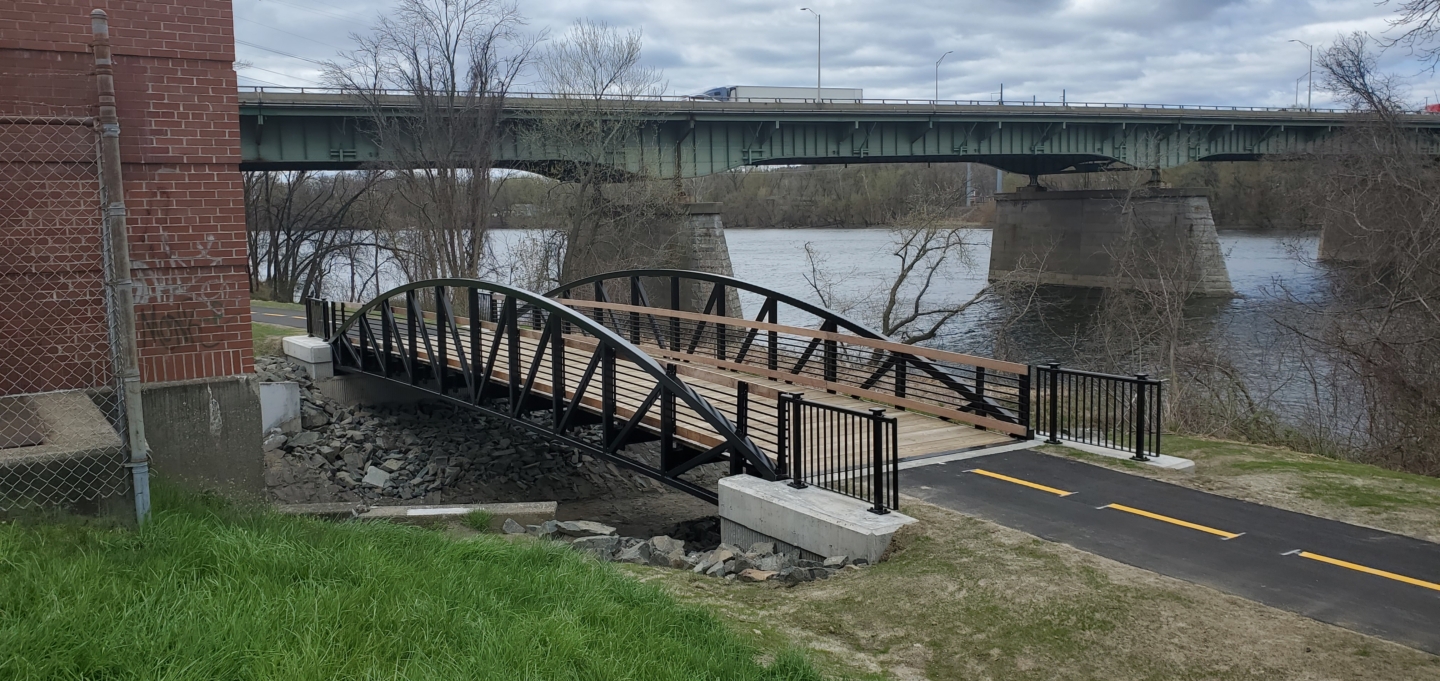
On the Connecticut Riverwalk North in Chicopee, Massachusetts, a prefabricated bridge was designed to carry the trail across a 65-foot span over a stormwater outfall channel. Located within a flood control district, the project also required careful coordination with existing dike infrastructure and grading strategies to avoid floodplain impacts. These structural elements ensure the trail remains safe, accessible, and resilient, while supporting long-term performance in a complex environment.
Environmental Permitting: Shaping the Path Forward
Environmental considerations often define how and where a bike path can be built. BETA’s wetland scientists and permitting team navigate complex permitting requirements, protect sensitive resources, and develop mitigation strategies that ensure compliance and keep projects moving forward responsibly.

The Norton/Mansfield Rail Trail Extension in Massachusetts required careful coordination around forested wetlands, vernal pools, and Areas of Critical Environmental Concern. By guiding the project through these constraints, the team helped develop acres of successful wetland replication and deliver a four-mile multi-use path that ensures long-term sustainability.
Landscape Architecture: Creating Purposeful Spaces
Beyond functionality, bike path design is about creating recreational spaces that people want to spend time in. BETA’s landscape architects focus on the user experience, incorporating amenities, ecological design, and community identity into every project.
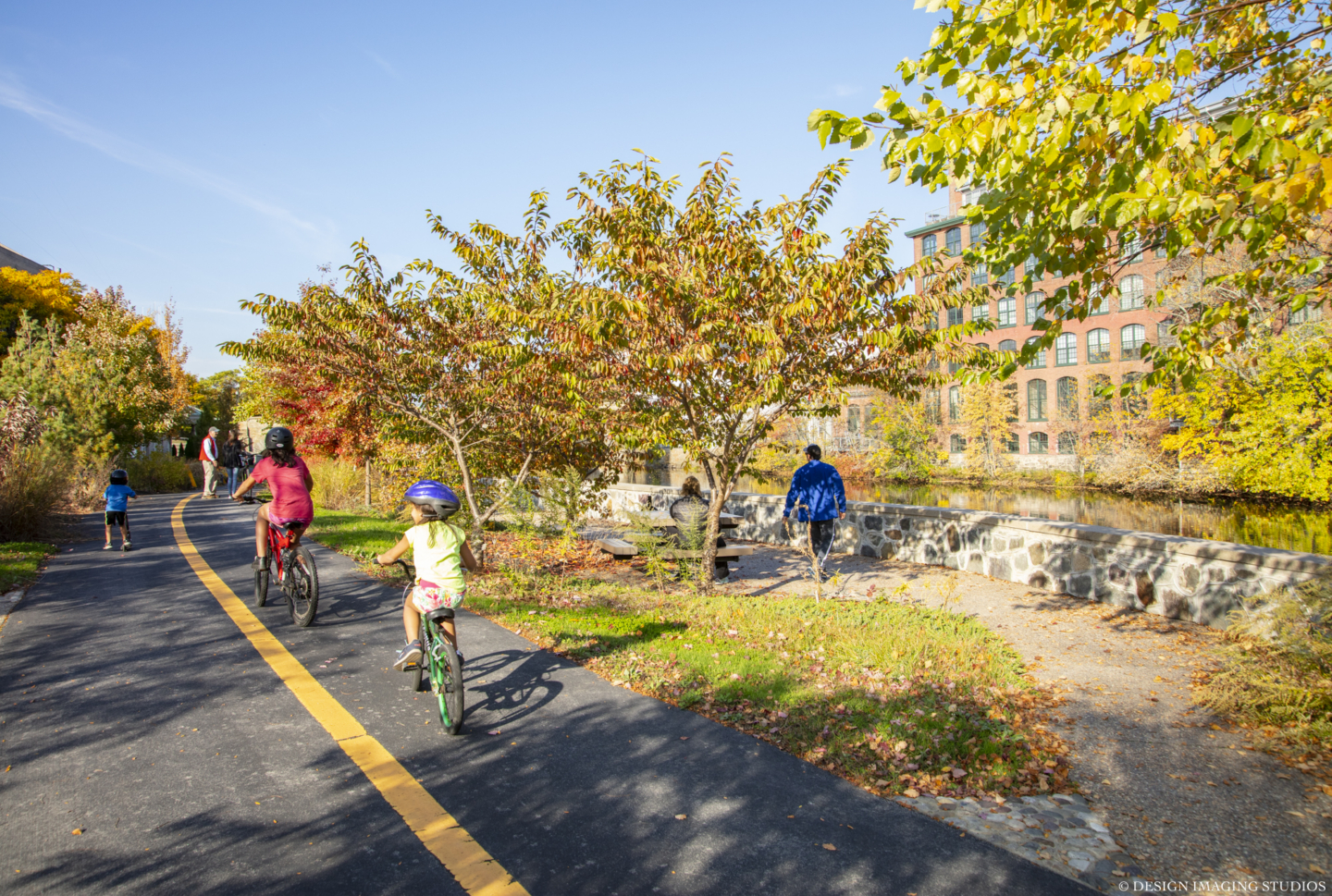
At the Slater Mill Multi-Use Path Improvements in Pawtucket, Rhode Island, the design completes a key off-road segment of the Blackstone River Bikeway while enhancing access to the historic Slater Mill. A shared-use path, planted buffers, and a reconfigured streetscape create a safer and more streamlined experience for pedestrians, cyclists, and vehicles alike. Careful material selection and layout ensure the improvements complement the historic mill setting, turning a functional connection into a cohesive and welcoming public space.
Bike Month highlights the growing importance of trails and outdoor spaces as community amenities. It also emphasizes the coordination required to deliver them successfully. By integrating transportation and structural engineering, environmental science, and landscape architecture expertise all under one roof, BETA helps communities create comprehensive bike trails that are connected, resilient, and built to last.